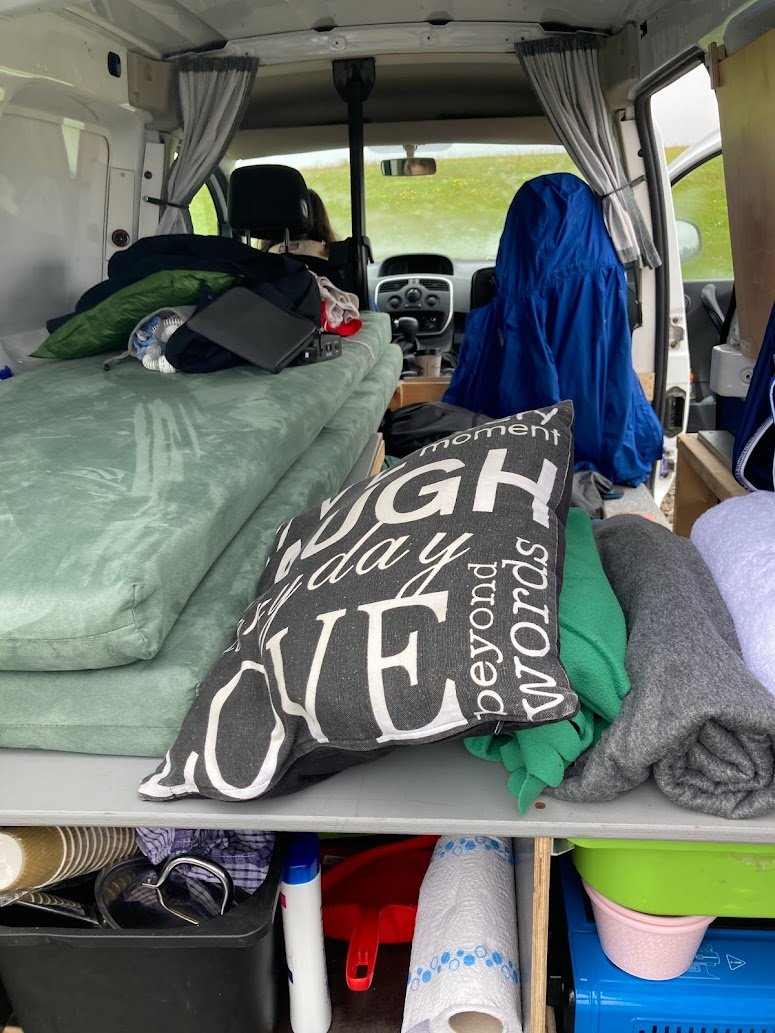
We had plenty of room in our van that we rented from Go Campers in Iceland.
Iceland and the Ring Road?
Iceland captivated us two years ago when we made a quick stop to Reykjavik on the way to Scotland. Icelandair offers the ability to stopover in their country on a transatlantic crossing at no additional charge. We were immediately bewitched, bothered, and bewildered by the country that felt like another planet.
Camping in Iceland in August means comfortably cool weather and lots of daylight. Yes, it is in the high tourist season, but Iceland didn’t ever feel overcrowded to me. And camping off season would be difficult due to unpredictable weather and closed roads. So this is one trip we took off schedule for us. Note that Northern Lights are generally only viewed between October and April.
So as the world slowly opened its doors again, Iceland beckoned, and we couldn’t wait to explore more of this stunning country. It was our goal to camp in Iceland and drive around the Ring Road (Route 1) and see as much as we could in the week that we had.
Preparing for Iceland…
Ideally, you should have more than one week to drive the Ring Road– closer to ten days to two weeks to really take it all in at a steady pace. However one week was all we could take off from work. It is doable, but it definitely requires more preparation. You just don’t have time to “waste” if you want to get all around Iceland and back in seven days, and we used the following printed resources to get organized:
-
- Atlas Obscura’s “122 Cool, Hidden, and Unusual Things to do in Iceland“
I also found a great website article that I referred to time and again. This article really helped me organize my thinking: to first list all the stops on the Ring Road that really interested me, and then prioritize and pare down to form our “can’t miss” list.
Packing for Iceland’s Ring Road
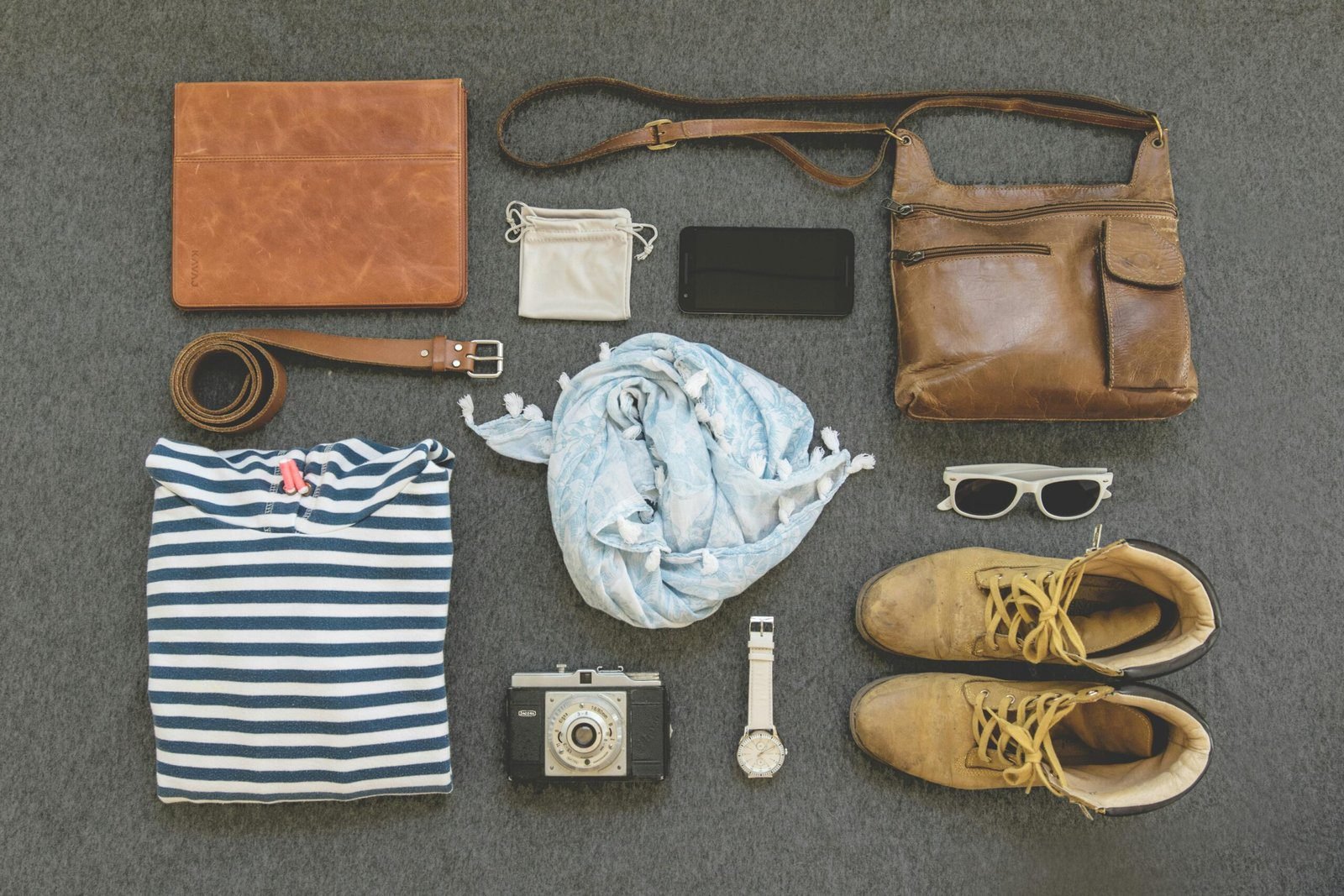
Everything you read will tell you that you can encounter any and all of the four seasons in one Icelandic day. They are correct. Think layers, think warm clothes. I don’t believe in checking luggage so I packed everything to fit into a backpack. Note: I am 4’11” so the backpack is not huge– maybe 35L?
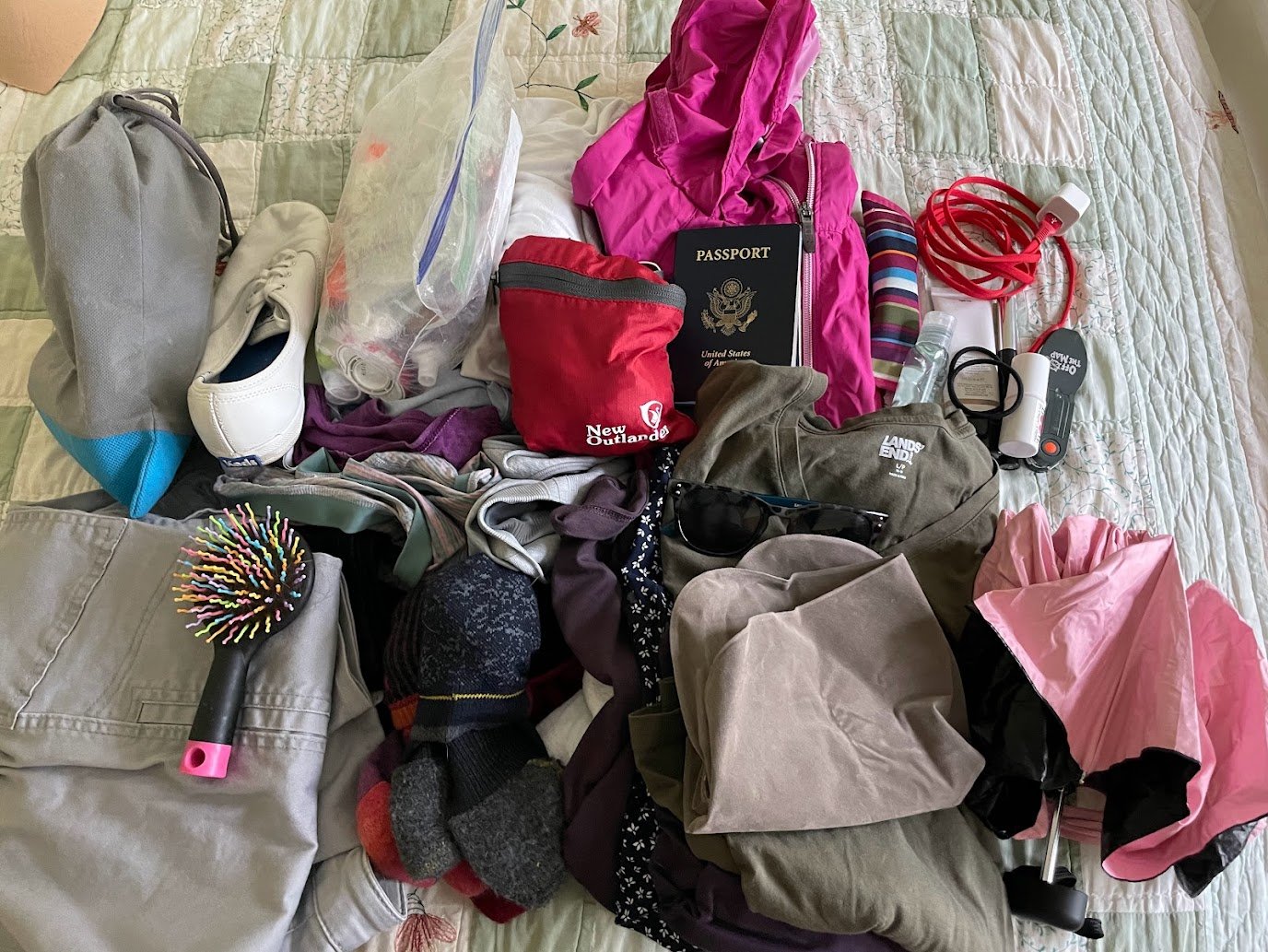
Most of the items I packed are in the photo, except for the bathing suit. It all fit into the backpack just fine. We also brought along walking sticks, which we did use on our hikes, but left at the Go Campers site for someone else to use.
I WORE my bulkiest clothes on the plane: jeans, hiking boots, short sleeve shirt with a tunic for chillier days.
We knew we would be doing a fair amount of physical activity too. I also packed two freeze dried camping meals as a “just in case” since we would be arriving in Iceland on a national holiday. A lot of stores might be closed and I wanted to be sure to have food that first day.
To save time, stress, and overpacking, you can download my Complete Packing List for camping in Iceland…
Lastly, I downloaded the following apps: Parka.is, which allows you to pay for parking in Iceland without having go to one of the pay parking stations, a currency converter to make Krona to USD conversions easier, and I bookmarked www.en.vedur.is so we could check for excessive winds on the roads (recommended by our Go Campers assistant).
Nine hundred miles, two people, one camper van, and the Ring Road…
In my reading about driving the Ring Road,we became excited about the idea of renting a camper van for the trip. There are several really great places to rent camper vans, and we chose Go Campers to rent a Go Smart 2 person automatic camper. Be aware that many car and van rental services offer manual transmission vehicles. If you don’t know how to drive stick, then be sure your rental is an automatic.
Iceland’s Ring Road is fully paved, as our most of the roads around the coast of the country. However, roads that cut through the middle of the country (designed to save you time) are often not. These are F-roads (and roads are marked with an “F” in front of the route number. Only 4x4s are able to travel the F roads, so if you want to go super rugged, be sure you get a rental that is approved for F road use.
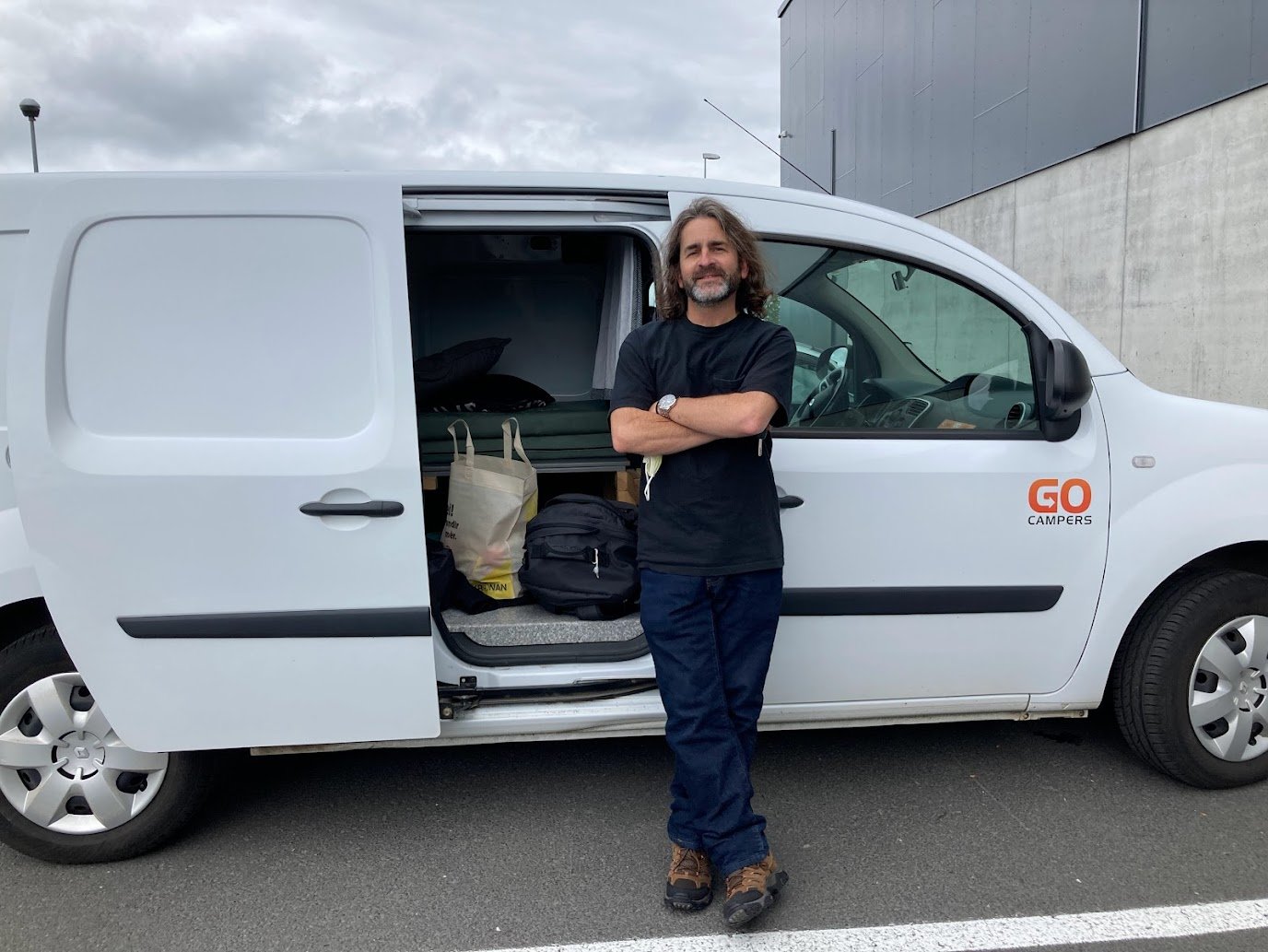
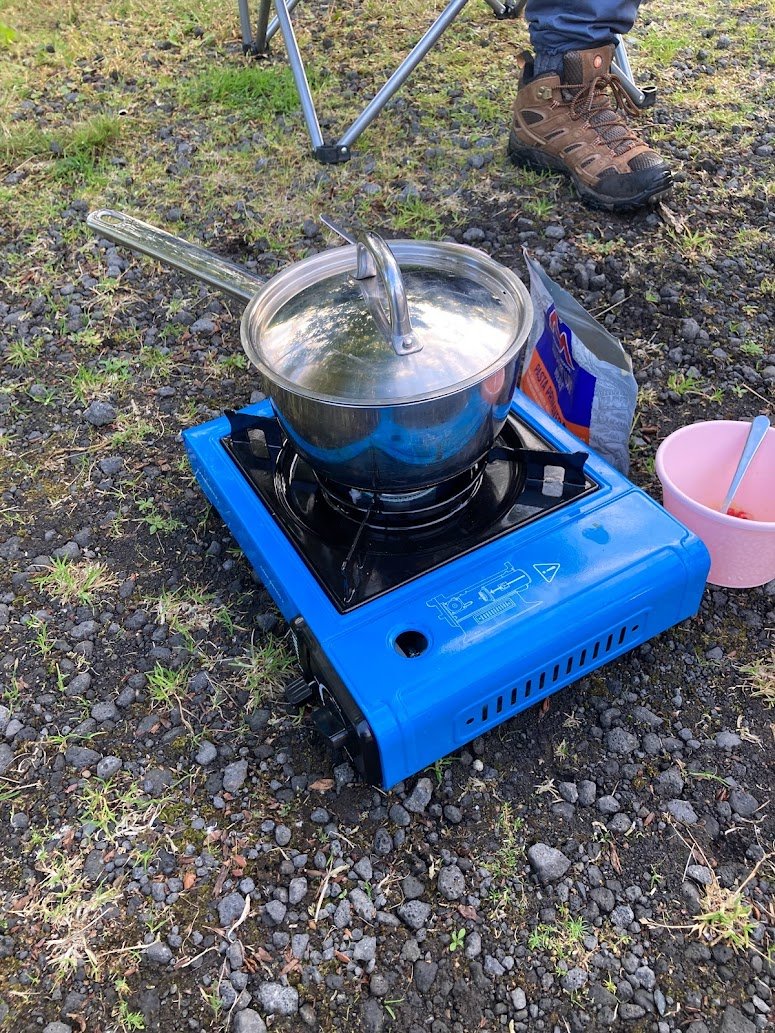
The camper really had everything we needed for seven days on the road, minus indoor plumbing. The van came with mattresses, pillows and blankets for two people; a butane hotplate; heater (for chilly Icelandic nights); pots, dishes, and cutlery; and curtains to block out the sun late night and early mornings. It was actually quite cozy. We also rented two camping chairs for the trip, and two towels since renting was easier than packing them. Most campsites and camper rental places have a “you pick” area where you can leave or pickup things you don’t need. We picked up a small bottle of shampoo and we returned the unused portion at the end of our trip for someone else to use.
Note: Be sure you take photos or a video of your van BEFORE you leave the rental parking lot. It will help in case there is some question about damage upon return.
Before we began driving the Ring Road, we stopped into a local grocery store for some supplies. For
about $22 USD, I bought some bananas and a couple of clementine, a loaf of bread, peanut butter and jelly, and some Ramen noodles packages. We also bought on
a second trip some paper towels, dish towel, and instant coffee. We planned to do a mix of cooking on the stove and eating out, so no need for a ton of groceries. Just enough to get by.
If I had to do it over again, I would likely bring or rent sleeping bags. While the blankets and heated van were plenty warm, they were just blankets and easily moved off me if I moved too much at night. A sleeping bag would have provided a cozier space is all.
Camping Card or No Camping Card?…
Campers in Iceland are given the opportunity to purchase a seasonal Camping Card. It is sold at campsites, van rental sites, Orkan gas stations, and a host of other places. In 2021, the Camping Card could be purchased for 159 Euros, or approx. $188 USD. It allows you to camp at any of 45 campgrounds around the whole of Iceland without paying any extra fee (except for showers, laundry, etc). The Camping Card is only good for the season, from May 15 – September 15 of each year for a maximum of 28 nights for one family (two adults and up to four children 16 and under).
Pricing for camping in Iceland will vary by campground but are generally around $20-30 USD per person per night. Unless you are going to spend more than seven nights in a campground during your trip, it doesn’t usually pay to get the Camping Card.
You’ll Need to Make Choices on the Ring Road
If you are like us, and don’t have unlimited time to travel Iceland’s Ring Road, prepare to make some choices. There’s LOTS to do on the Ring Road (let alone the whole country) and you will have to make peace with the fact that you just can’t see it all. Because there was a volcano erupting at the time, we made the decision to spend the day hiking to it in lieu of seeing something else. But a volcanic eruption is a transient thing– and who knows when it would come around again. That meant less time for us to hike to a nearby waterfall. See? Choices.
A Seven Day Itinerary for Iceland
Day 1: Arrival in Reykjavik and Hike to Fagradalsfjall, Camp at Grindavik
Iceland is full of volcanoes that erupt from time to time. We were incredibly fortunate to be in Iceland at the tail end of a volcanic eruption that began in March! Falgradalsfjall had been erupting like clockwork during the early months of its eruption but became much less predictable just before we arrived.
Still, one doesn’t often get the chance to see an erupting volcano in person so we made sure to devote our first day to climbing as close as we could to see what was left of the eruption and the smoldering lava fields that went on for miles.
Though we missed the regular eruptions of lava by mere days, we were still able to see the effects of the eruption on the land. Lava fields, still smoldering, went on for miles.
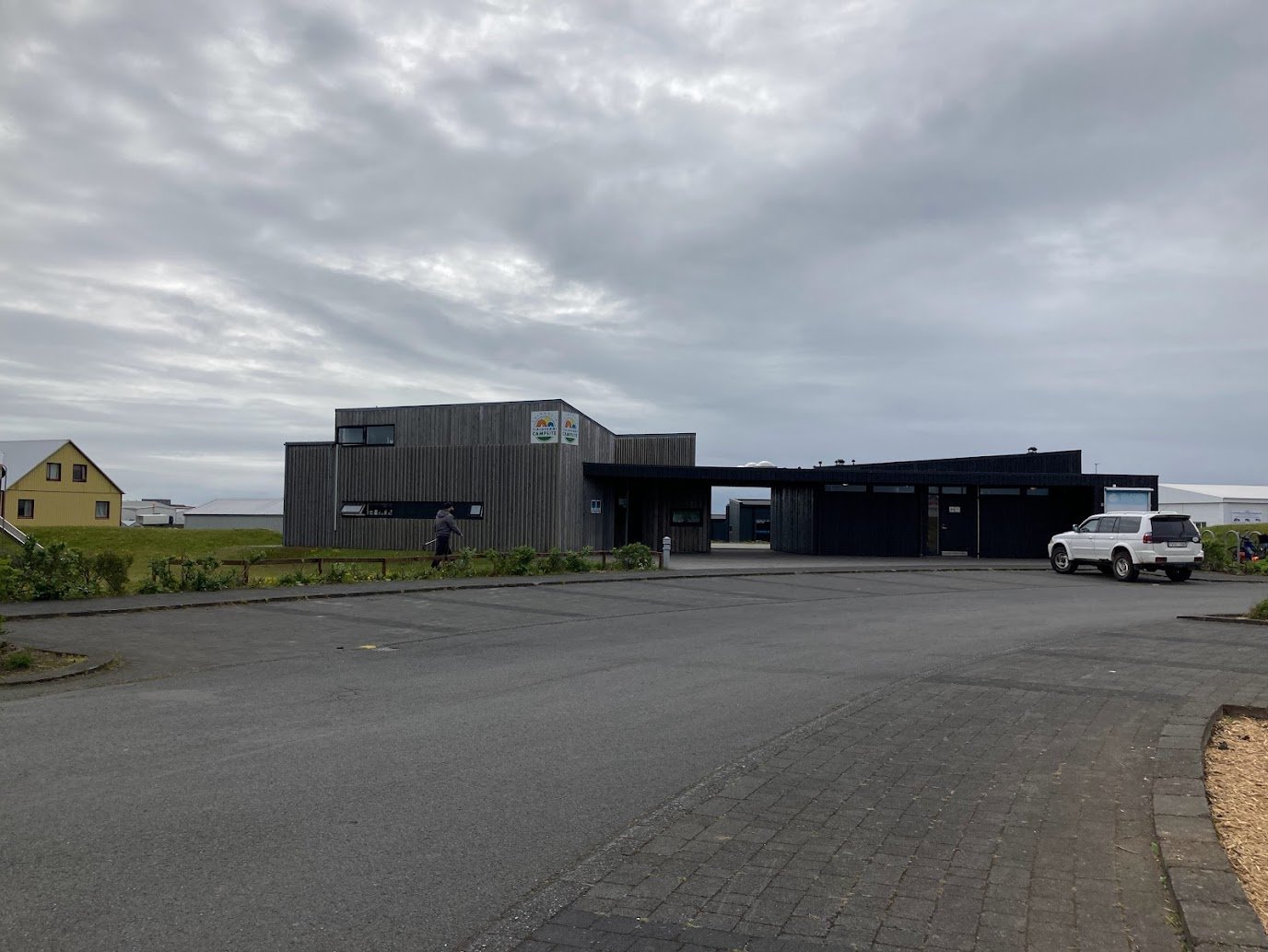
Our campsite that evening was at Grindavik. It is a very well known and popular campsite as it’s very close to Keflavik Airport, the city of Reykjavik, and has excellent facilities. The main camping building has communal kitchen facilities, showers, and toilets. All were very clean and people were quite friendly– sitting together, cooking their dinners and talking. Camping is a great way to meet fellow travelers and to share experiences. Don’t pass up the opportunity to talk with them.
The main building features showers, restrooms, kitchen area, and camp warden’s office. It is super clean and tidy as people are required to take off their shoes before entering the kitchen area. Note: Recent volcanic eruptions were right near Grindavik so you might want to check on the status of the campground there.
Day 2: Hike to Reykjadalur Hot Springs and Camping at Vik
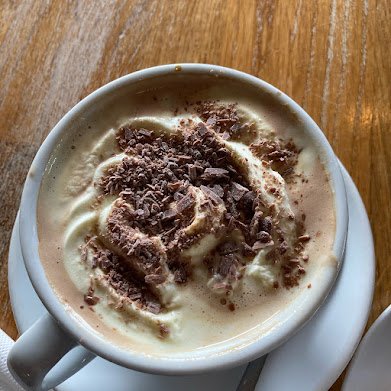
Our first full day in Iceland began with a leisurely (and I mean leisurely) wake up at around 10:30 am and breakfast in the fishing village nearby. So we enjoyed a leisurely breakfast in a local cafe’ right on the water, Cafe’ Briggjan. I got my favorite Suisse Mocha and an Icelandic pastry. The cafe’ was cozy, full of locals and tourists alike, and I soaked in the atmosphere.
Jet lag is a funny thing- sometimes I can shake it off easily and get right in sync with the time change, and sometimes not. I’ve learned over the years of traveling not to fight too much with what my body is telling me. If I have to sleep, I sleep- or I won’t enjoy anything.
Reykjadalur Hot Springs
Reykjadalur Hot Springs is just off the Ring Road an hour’s drive from the Grindavik campsite. After parking the car at the pay parking lot, the walk to the thermal river is a two mile hike with an ascent of about 1/4 mile.
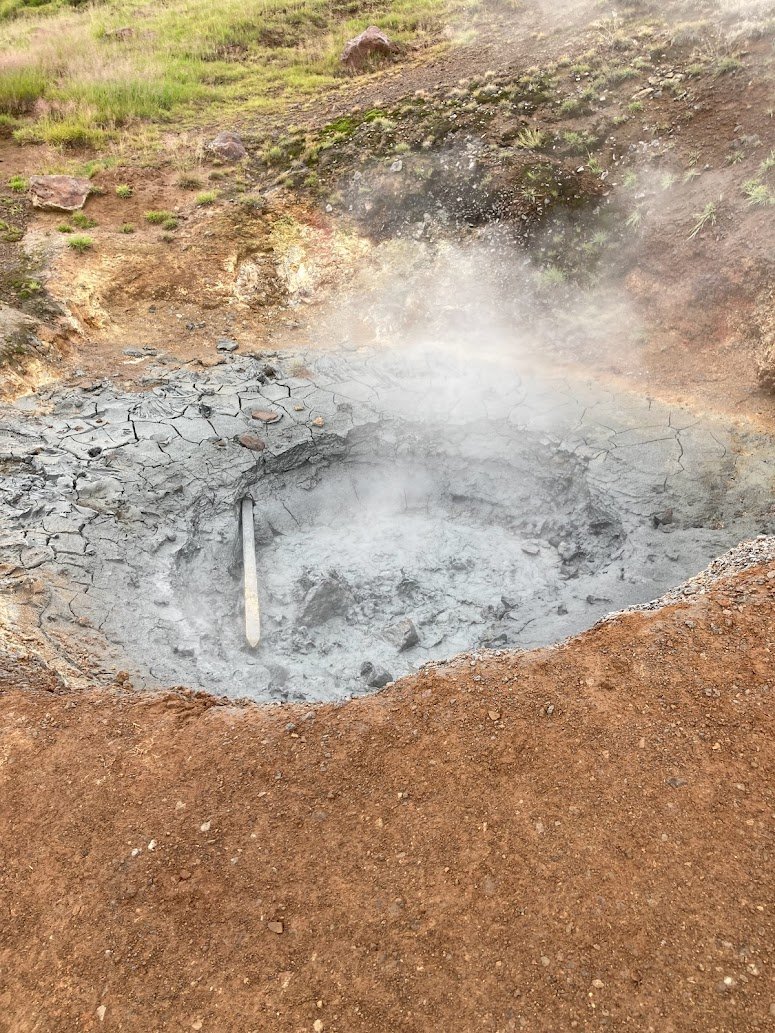
The walk up to the hot springs is wild, rugged, and will leave you with your mouth hanging open in awe: pools of boiling mud a short distance away from streams, waterfalls and mountain goats. Keep the camera handy and enjoy the silence as you leave the tourist info center and others behind.
At the end of the hike up the mountain, my sore and tired muscles were rewarded with this…
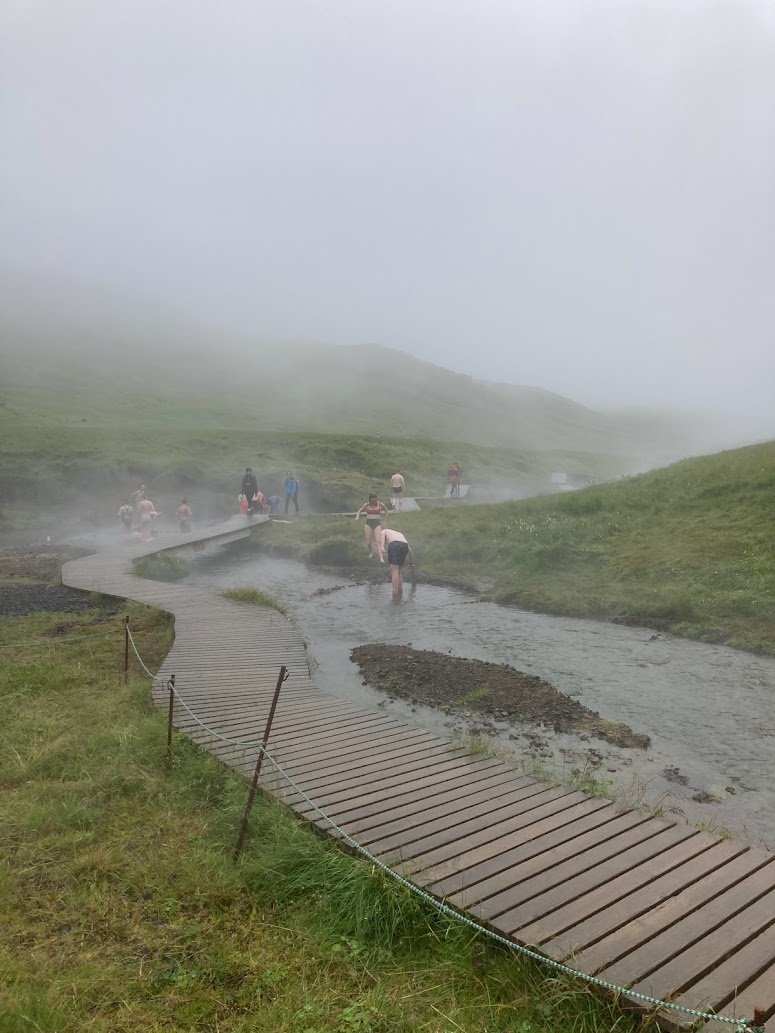
Among all this natural beauty and wonder, a thermal river and hot springs just waiting for tired hikers. We brought our bathing suits but note that there are no facilities at all, just an area where you can leave your belongings.
The hot springs are about a foot deep in most places, so you can’t actually “swim” in them, but you can sit and relax almost like a hot tub.
Overnight at Vik Campgrounds
Because we had spent so much time up at the hot springs and had a late start to begin with, we opted to skip Selfoss and drive straight to our campground in Vik for the evening. Vik is a beautiful small town located just off the Ring Road and it was an easy drive there. The campsite is very conveniently located right in the center of town within walking distance of an Icewear (camping and outdoor gear store) and a Bonus grocery store. There is also a small food stand located inside a school bus right next to the campsite: The School Beans Cafe.
A Word About Campground Washing Machines…
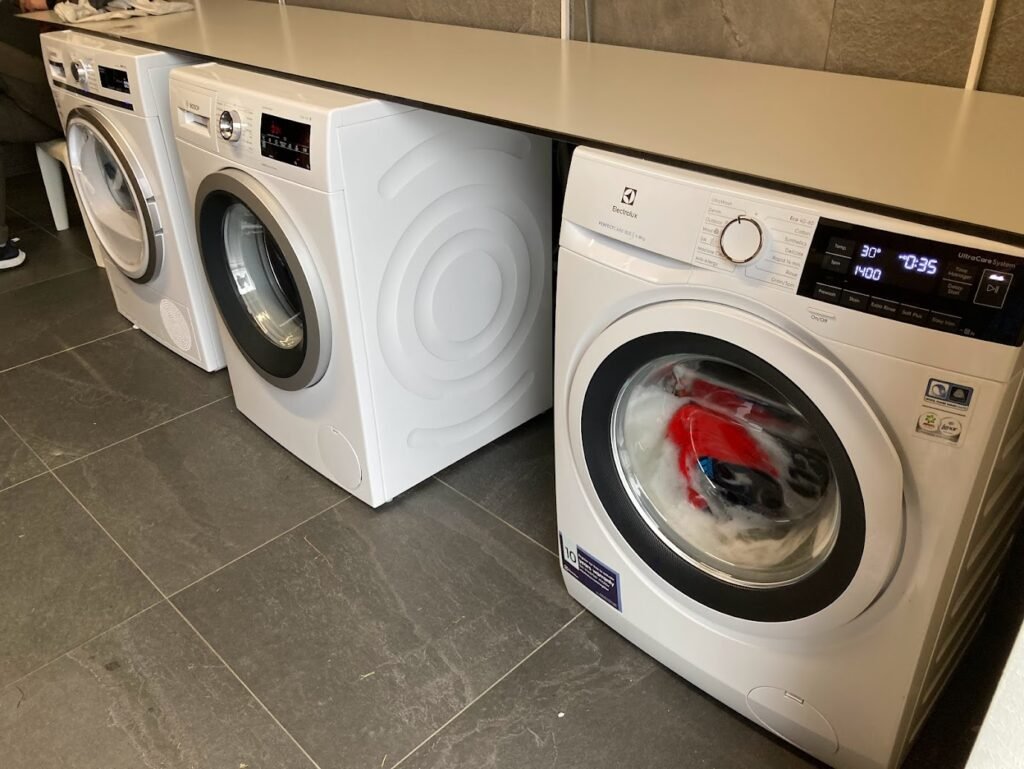
Very often there are washing machines at the campsites, but they come with a bit of an explanation. First, is that you should plan on paying for them above your campground fee. I found them to be about $8 USD. You usually pay for a token at the camp warden’s office and then use that in the machine but every campground does it differently. Second, these machines are super energy and water efficient and do take some time to clean your clothes. Plan on spending a couple of hours doing your laundry when needed. Third, there are usually only one or two of each at each campsite, so you are competing with the other campers for the use of the machines. But hanging out in the laundry room is a great way to meet people from all over the world!
The easier thing would be to rinse items out by hand and then hang to dry in the van…. if you rinse one or two items out each night in the camp sink, it is much easier to keep on top of things and not have to waste a lot of time waiting for the wash.
You have better things than laundry to do on your vacation…
Day 3: Glaciers, Icebergs and the Road to Hofn
After two days of driving the Ring Road, we took a look at our itinerary for the next few days. It was clear that we were moving at a slower pace than we needed in order to make it all the way back to Reykjavik to return the camper in time. Taking our time each morning to hit the road was not helping us either. We took a look at our map and our “can’t miss” list of stops each of us wanted to make. We’d seen a volcano, we’d seen hot springs– how about a glacier?
Skaftafell
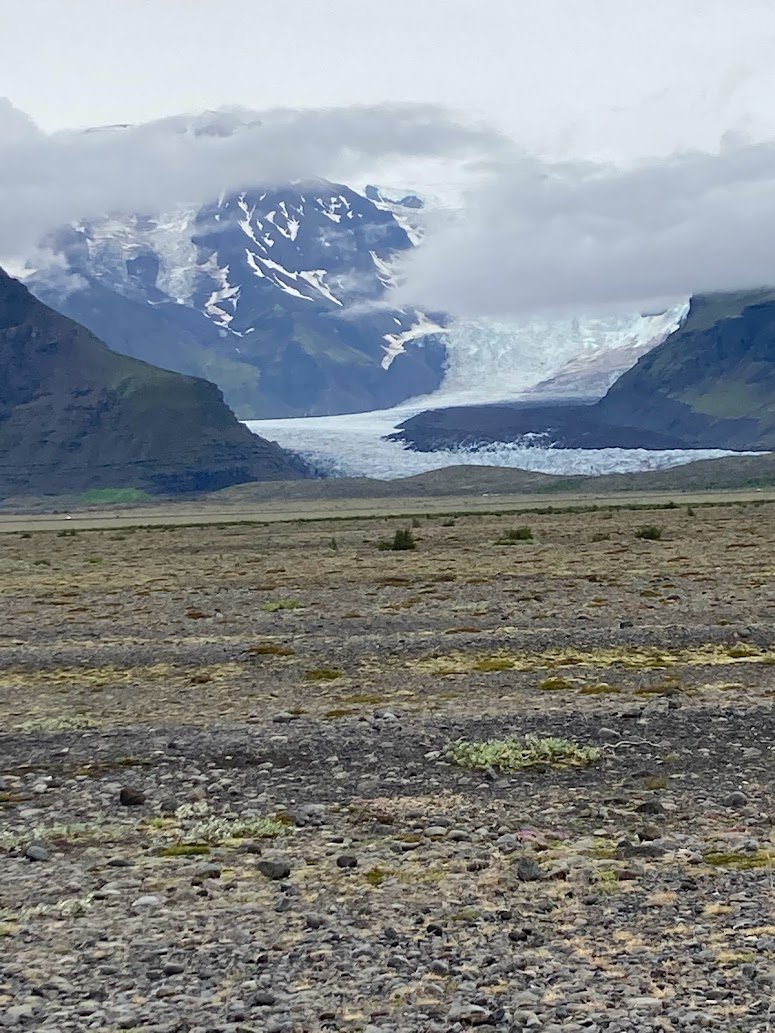
Skaftafell sits on the edge of the Vatnajokull National Park in southeast Iceland. There are plenty of hiking trails at Skaftafell that range from very easy to challenging. You can choose whatever you like based on your time and fitness level. There are also guided tours that will take you walking on the glacier. Because we knew were pressed for time, we skipped the tours and took Hiking Trails 1/2 to view the glacier. It’s a very easy hike to get you within good view of the glacier.
And down the road… Fjallsarlon Glacial Lagoon and Diamond Beach
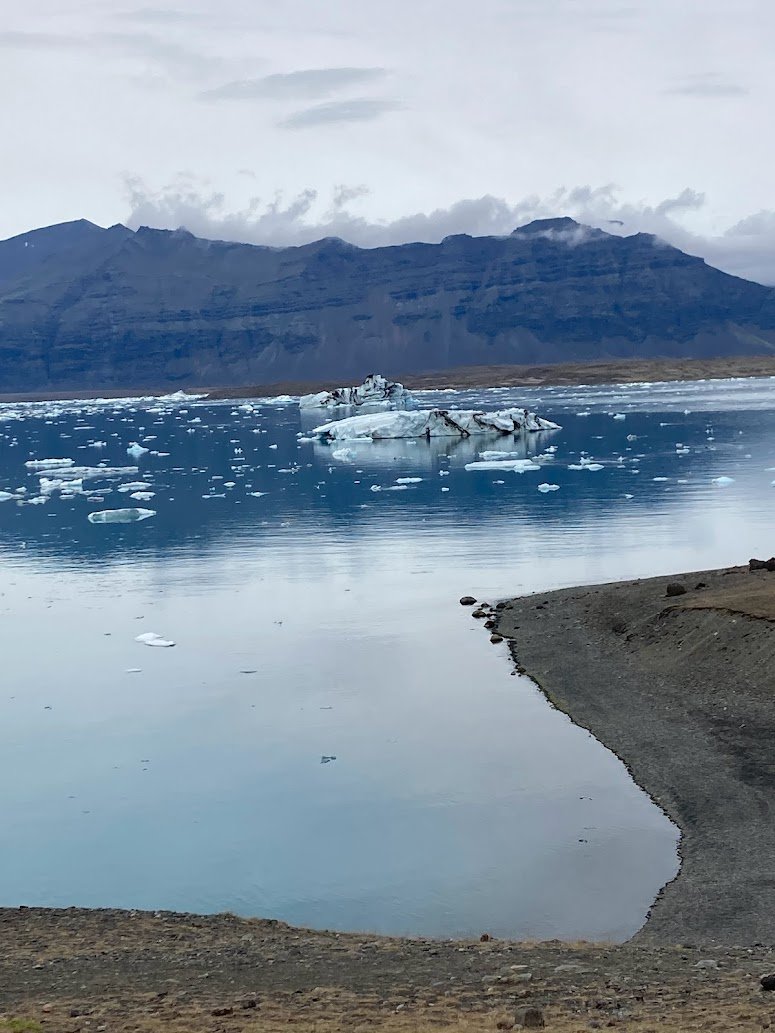
After viewing the glacier, it’s just a short drive over to Fjallsarlon Glacial Lagoon to view icebergs. No hiking to this site, just pull off Ring Road into a parking lot and it’s right there. There are also boat tours of the glacial lagoon if you want a more close up view.
After the glacier calves, the icebergs float out of the glacial lagoon, across the Ring Road, to the North Atlantic. Diamond Beach is a great place to watch the bergs flow gently out to the ocean.
From Diamond Beach, we drove to our campsite at Hofn, just south of the Eastern Fjords. The campsite is really quite large and we had no trouble finding a nice spot to spend the night.
Day 4: The Eastern Fjords
The Ring Road hugs the coast on the east side of Iceland– tracing in and out of the nooks and crannies that are the Eastern Fjords. There are some lovely small towns on this side of the country, and they are always worth a stop and look around. We were heading to Seydisfjordur, a much photographed town in Eastern Iceland.
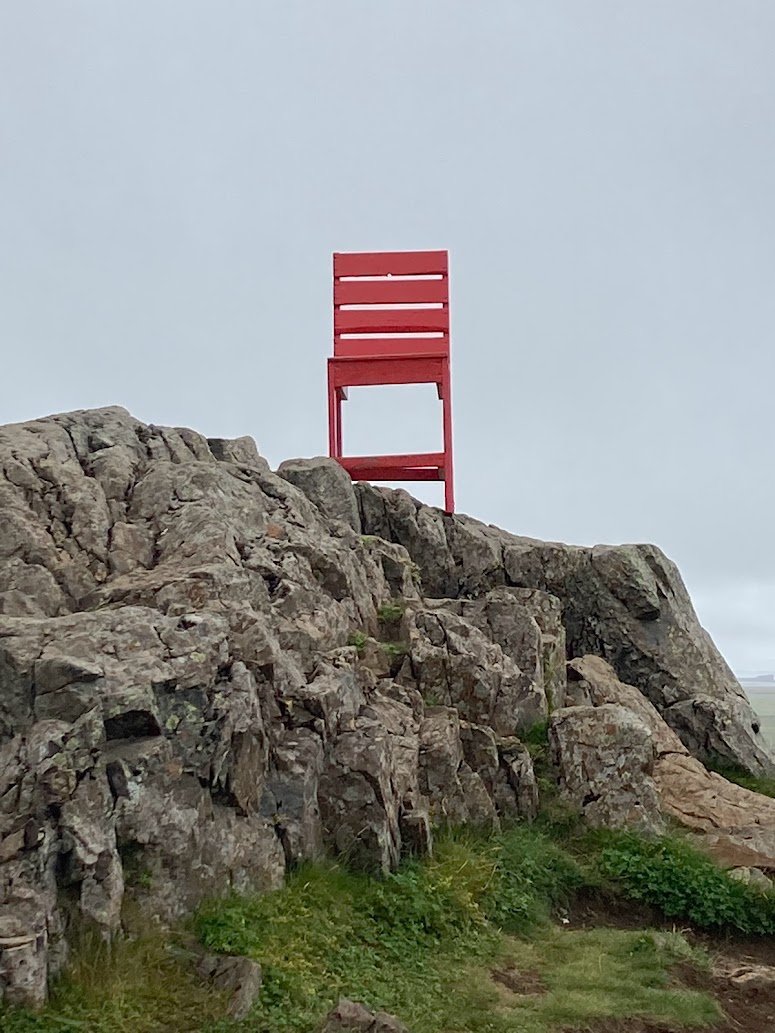
One of my favorite parts of Iceland is the amount of public art located throughout the country. Along today’s drive, after miles of isolation, we spotted The Red Chair, just waiting for us. I’m not sure why an artist was inspired to bolt a huge bright red chair to the rocks on eastern Iceland, but it certainly catches the attention of everyone who drives by. Go ahead and climb up to have a seat. You know you want to.
The Road to Seydisfjordur
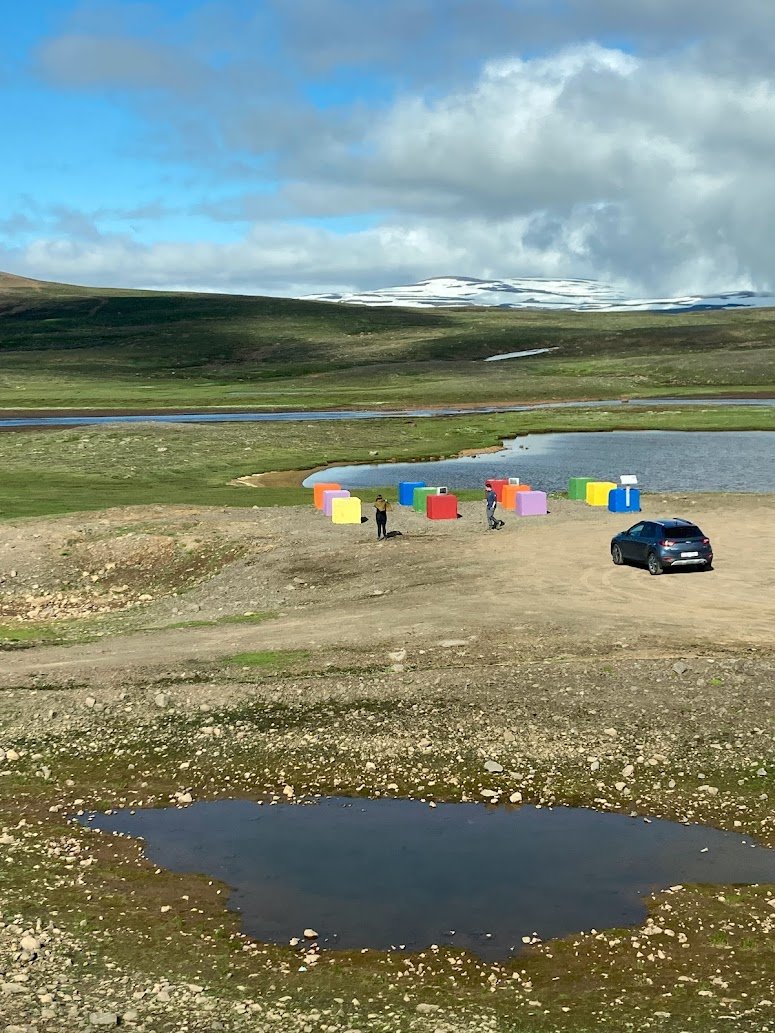
The road to Seydisfjordur is as interesting as the town itself. At Egilsstadir (a nice sized small city/large town) there will be a right turn onto Route 93 to Seydisfjordur. This is a stunning car ride through the Fjarðarheiði mountain pass and should not be missed! It is gorgeous and was also the first time we saw the sun since we had arrived in Iceland. I don’t say this with regret, as I love cloudy weather. But the sun did illuminate more of the scenery. Along the road into town is another work of public art that I (stupidly) did not stop for other than a passing photo.
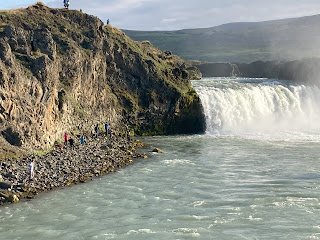
Also along the road is Gufufoss- an easy pull off to the side of the road to walk up to view the falls.
Seydisfjordur
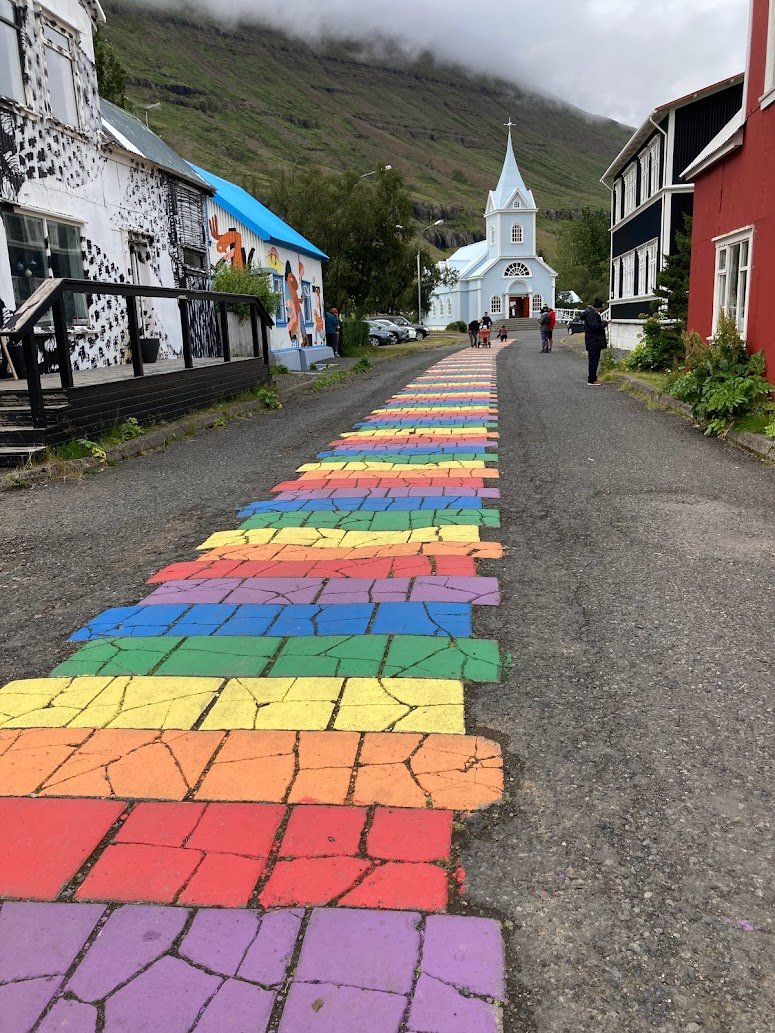
Seydisfjordur is one of the most photographed towns in Iceland, and while it’s very quaint, neither of us felt we needed to spend a lot of time there. We viewed the lovely rainbow path up to the church, and walked around a bit, but we were craving a bit more action and wanted to reach Akureyi that evening.
Day 5: Akureyri
Akureyri is the second largest city in Iceland– about 18-20,000 people if that helps. Truthfully, I can’t decide which city, Akureyri or Reykjavik, that I like better. Our intent was to drive back along the Ring Road to view the Dettifoss waterfall (one of the most powerful in Europe), and perhaps the Mytvatn Nature Baths, but we had just seen Gufu and Godafoss Waterfalls and the Reykjadalur Hot Springs. We really wanted to explore a new city and area so we elected to spend the day in and around Akureyri.
Our road trip that day took us up road number 82 to explore the Trollaskagi Peninsula. The drive was spectacular and we had gorgeous views of the Greenland Sea and Grimsey Island. For those looking for an additional adventure, it is possible to take a ferry to Grimsey Island to see the Arctic Circle marker.
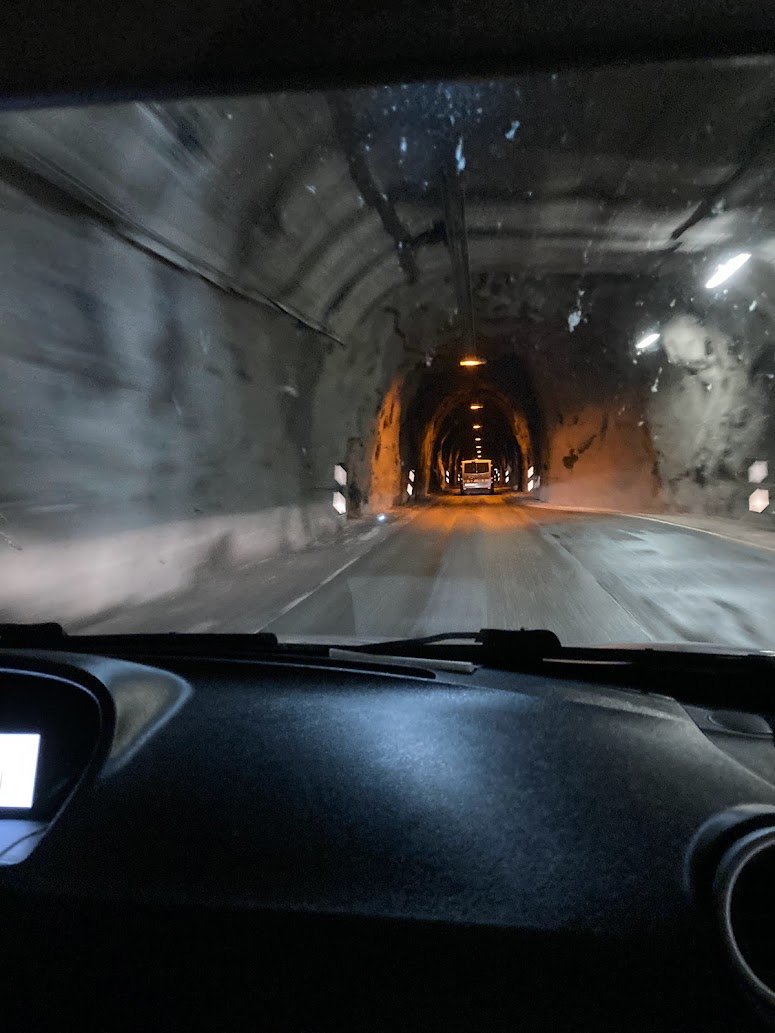
Stops on the Trollaskagi Peninsula included Dalvik and Siglufjordur. The drive to Siglufjordur is hair-raising. It includes a very high cliff drive followed by a one-way tunnel. Yes, a one-way tunnel. So if you are heading north, you must yield to drivers going south, and there are convenient pull-offs for cars every 100 feet or so in the tunnel. If you aren’t used to it (and we weren’t), you have to figure it out on the spot.
Night at Akureyri Campsite and Swimming Pool!
Every town in Iceland, large or small, has a public swimming pool which residents use year round. Visitors are also welcome to use the local pool and I gave it a go at the Akureyri Sundlauger (swimming pool), just across the street from our campsite. I did not bring my camera into the pool area for obvious reasons but here are some
Every town in Iceland, large or small, has a public swimming pool which residents use year round. Visitors are also welcome to use the local pool and I gave it a go at the Akureyri Sundlauger (swimming pool), just across the street from our campsite. I did not bring my camera into the pool area for obvious reasons.
Since Akureyi is a large city, the pool had a lot of amenities including two water slides (that would rival several in the US), two large swimming pools, and four hot tubs (each tub set to a different temperature). In each hot tub were personal water jets for each person to relax tension out of his or her body.
Public swimming pools are super clean and the US could learn a thing or two with how orderly Icelanders organize theirs. First, you MUST take off your shoes before entering the locker room. Second, you MUST take a complete shower (with soap and without a bathing suit on) before entering the pool. There is also a separate drying room before you go back to your locker so that the locker room is clean and dry.
Some scenes from Akureyri:
Day 6: Horseback Riding and Back to Reykjavik
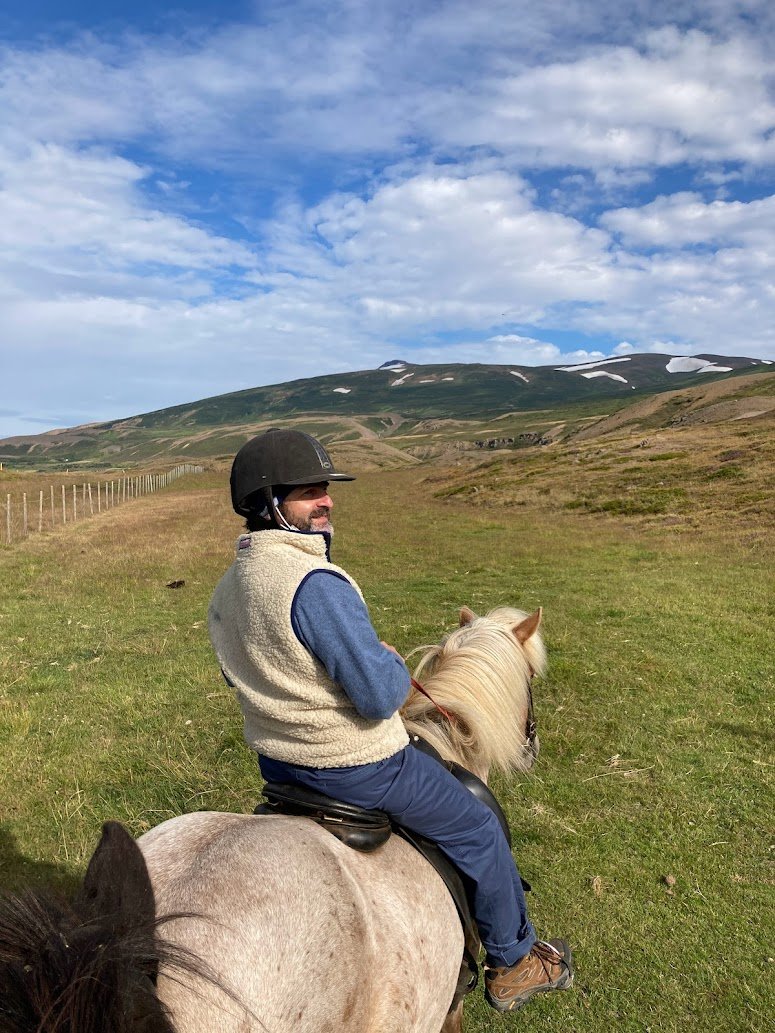
Even though I’ve only had a few riding lessons, I love horses and wasn’t going to pass up the opportunity to ride an Icelandic horse. AND, my husband had never been on a horse before! OK, I couldn’t miss this.
We chose to ride at PolarHestar, a farm about 30 minutes north of Akureyri. We chose this farm specifically because it offered a variety of tours, including some that were 1-2 hours in length. Best part of the tour (besides the amazing scenery that surrounded us) was that our guide instructed us how to take the horses up to a gallop! In every other guided horse tour I’ve done, we always stay at a slow walking pace. Riding the horses at a gallop was thrilling!
And Back to Reykjavik…
In preparation for turning in our camper van, we make the 4.5 hour drive back to Reykjavik right after our morning at Polar Hestar. While we had been to Reykjavik in 2018, we love spending time in Iceland’s capital.
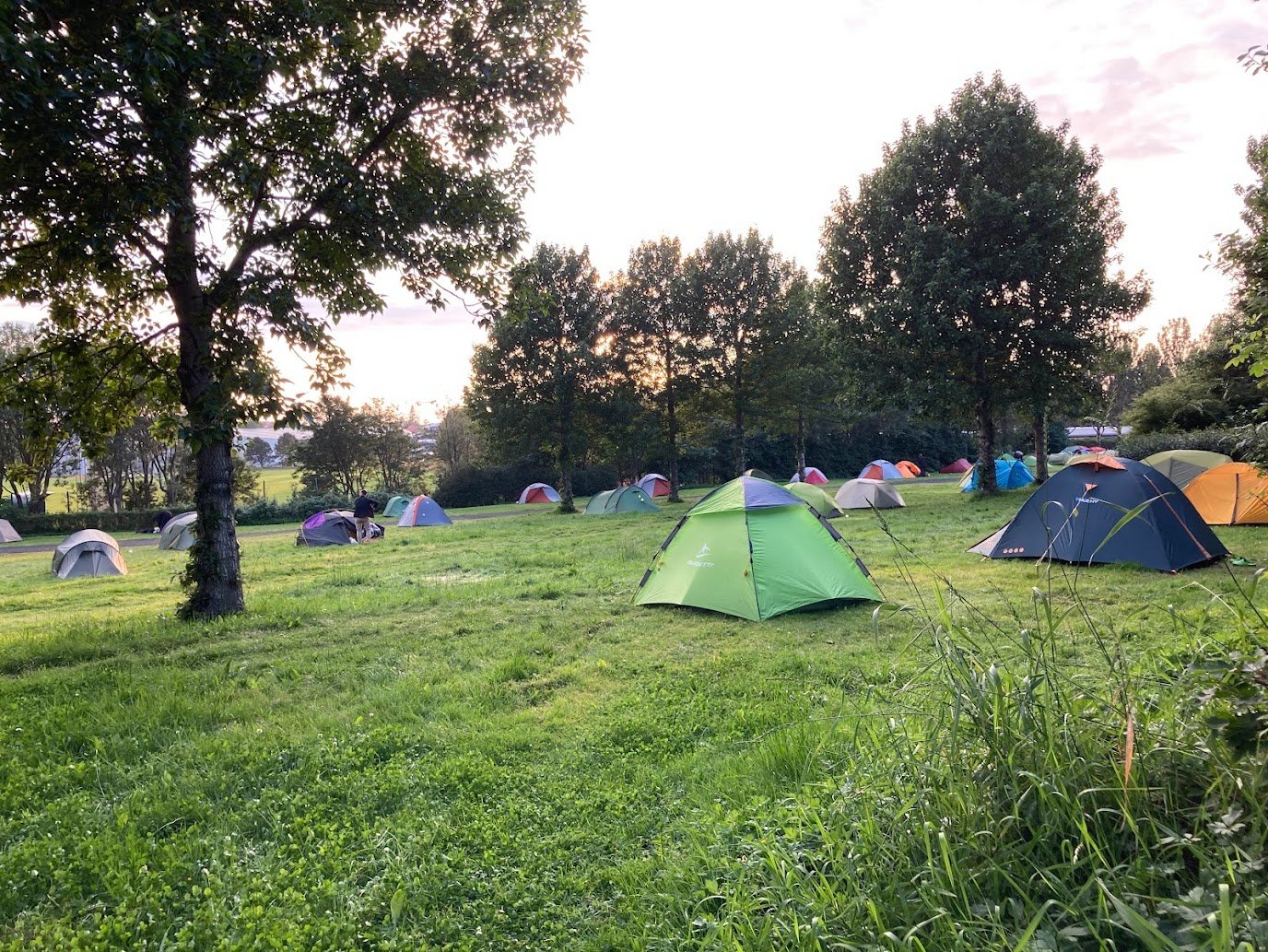
The Reykjavik Eco Campsite (about a 30 minute walk from downtown) is huge. Plenty of room for everyone and very nice facilities.
Day 7: Thingvellir and Strokkur: A Taste of the Golden Circle
We drove into Reykjavik from our campsite for a stop at our favorite breakfast place, Mokka Kaffi. If you go, be sure to try the homemade waffles with whipped cream and jam.
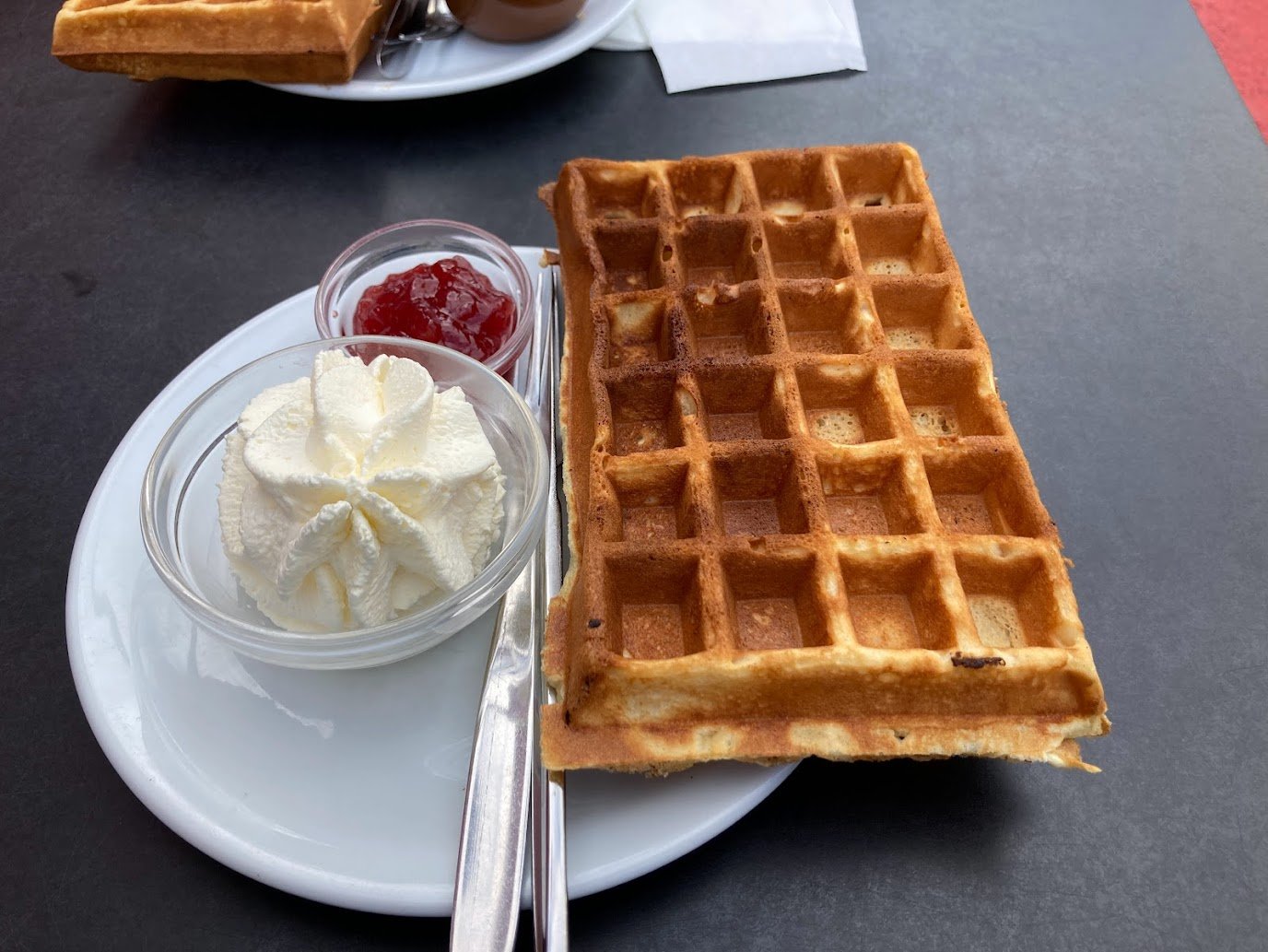
On our last day, we used it to visit two places in the Golden Circle: Thingvellir National Park and Strokkur geyser.
Throughout my life, I’ve been fascinated by the edges of things– the exact place where one thing meets another– its liminality. There’s no better place to explore the edge, whatever that is, in Iceland’s Thingvellir National Park. This is where the two tectonic plates (North American and Eurasian) meet up.
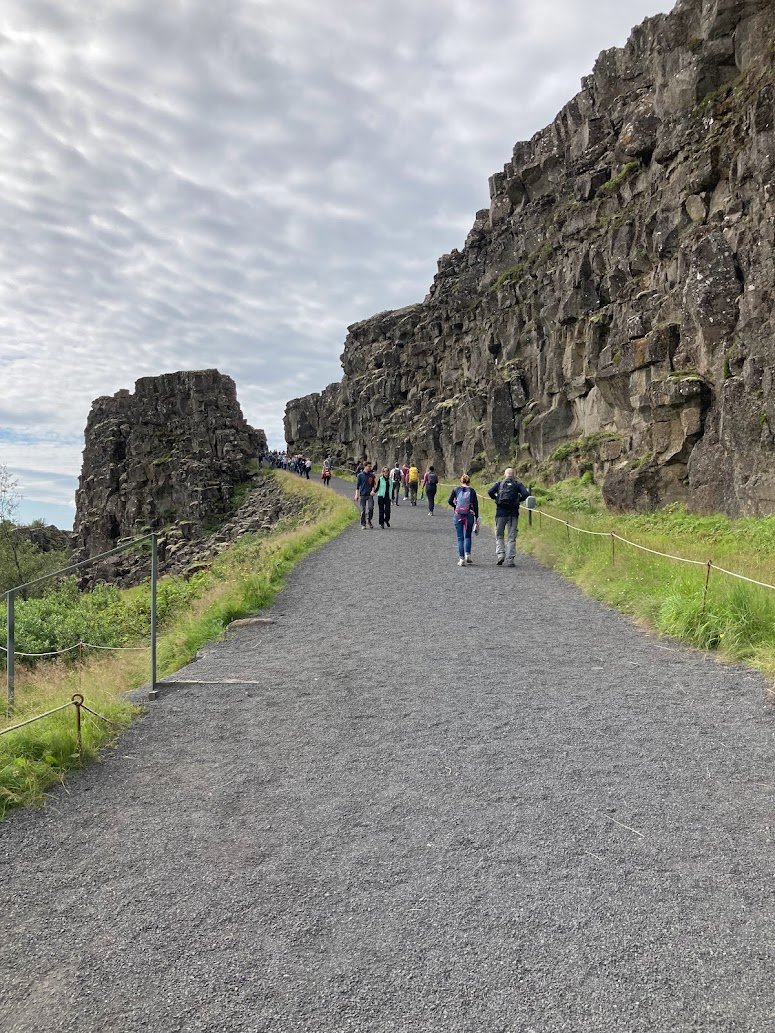
We’d seen volcanos, glaciers, icebergs, black sand beaches, thermal rivers, pools of boiling mud… but not a geyser. We left Thingvellir National Park to head over to Strokkur Geysir. This is the most regularly active geysir in Iceland and erupts on a precise schedule. No need to explain. Just watch.
Ending our Ring Road Trip
Returning the campervan was easy at Go Campers. From there, we stayed at the Marriott near Keflavik International Airport since our flight to Boston’s Logan Airport was early the next morning. If you have an early (ish) departure from Keflavik, I highly recommend staying close to the airport. Also, the Marriott has a washing machine for guest use (just saying).
Costs Associated with Trip
Because of my love of travel, I’m always looking to have my travel budget go as far as possible. Iceland is a notoriously expensive country to visit since so many goods and services have to be imported. Lodging, gas/petrol etc. are very expensive.
We faithfully use a Chase Sapphire card so we can accrue Ultimate Rewards Points to be used on ANY airline at ANY time. We had accrued enough for two free economy tickets to Iceland on Delta Airlines.
The camper van was by far the cheapest way to travel around Iceland as we didn’t have to pay for additional lodging (except when we wanted to). Our rental for a two person automatic camper van was approx. $1800. Remember that gas is VERY expensive–about $8 per gallon, but the van got excellent mileage.
That left food (we used our camping stove whenever possible and only ate breakfast at cafes- gotta have my Suisse mocha. Maybe a couple of restaurant dinners but nothing super fancy. We made use of grocery stores whenever possible.
Best news is that many of Iceland’s sights are free! You only need to pay for parking.
We’ll Go Back…
The Ring Road is just what it sounds like, a two-lane road that circles the country. And yet in all its simplicity, it feels a bit like a Choose Your Adventure book, and allows for endless opportunities to explore Iceland. Another trip around the Ring Road would comprise a whole new set of experiences– and even though the route is the same, it would be a completely different adventure.
This post may contain affiliate links. This means I may earn a (small, like very small) commission should you chose to sign up for a program or make a purchase using my link.